

Summary: Root canal treatment costs £76.60 on the NHS in England as of April 2026 (Band 2, which also covers fillings and extractions within the same course of treatment). Privately, root canal treatment cost typically ranges from £250 to £2,500, depending on which tooth is being treated, how many canals it has, whether a general dentist or specialist endodontist carries out the procedure, and your location. Front teeth (incisors and canines) are the least expensive to treat privately, from around £250–£1293, since they usually have a single canal. Molars, which can have three, four, or occasionally more canals, sit at the top of the range, from £850 up to £2,500 with a specialist endodontist in central London. A crown, often needed afterwards to protect the treated tooth, is priced separately and typically adds £500–£1,664.
So how much is a root canal, really, once you factor in everything involved? If you have a decayed, cracked, or infected tooth, your dentist may recommend root canal treatment or RCT, as it’s often shortened to save it from extraction. This guide breaks down both NHS and private root canal treatment cost by tooth, by provider type, and by location, plus what actually happens during the procedure, how long it takes, and the questions patients ask most before booking.
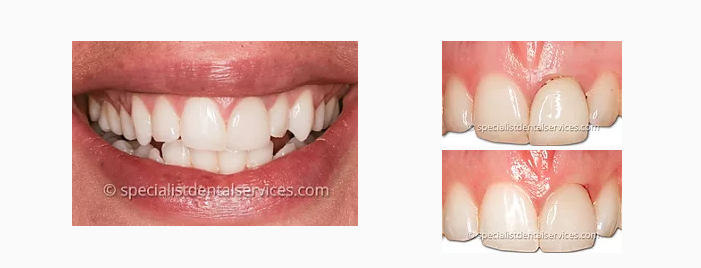
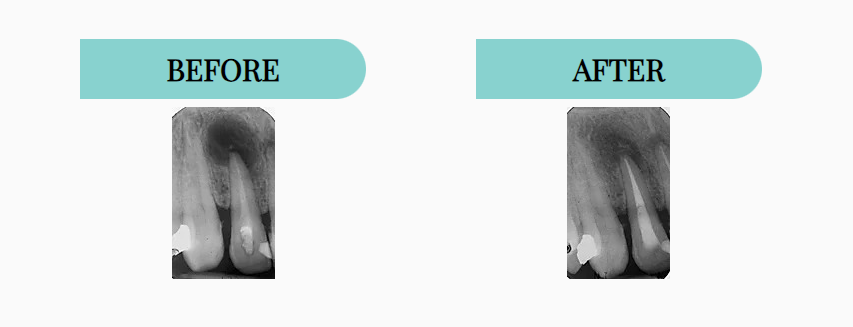
Root canal treatment also called endodontic treatment or root canal therapy involves removing infected or inflamed pulp tissue from inside a tooth’s root canal system, cleaning and disinfecting the canals, and sealing them to prevent reinfection. It can be carried out by a general dentist or, for more complex cases, a specialist endodontist: a dentist who has completed additional postgraduate training focused entirely on saving teeth through root canal treatment.
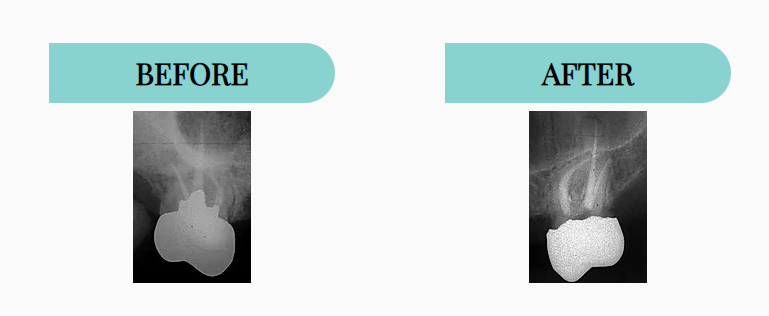
The procedure is typically needed when a tooth root infection or dental abscess threatens to cause irreparable damage to the tooth and surrounding gum tissue. After the canal is filled, the tooth is often more brittle than before, so a dental crown is frequently recommended afterwards to protect it from fracture and further decay.
Common signs that you may need root canal treatment include:
● Severe tooth decay or a cracked tooth
● A loose or failing filling
● Gum disease or gum infection near the tooth root
● Trauma or injury to the jaw or tooth
● Repeated dental treatment on the same tooth
● A broken or fractured crown
● Lingering sensitivity to hot or cold, or pain when biting down
Left untreated, an infected tooth root can lead to a painful dental abscess, swelling, tooth discolouration, and nerve damage. If you’re experiencing a toothache that won’t settle, don’t wait untreated infections can spread to surrounding teeth and, in severe cases, beyond the mouth.
Root canal treatment on the NHS falls under Band 2, which from 1 April 2026 costs £76.60 in England. This single fixed charge covers your entire course of treatment, including any fillings or extractions needed alongside it, so you don’t pay per procedure. If a crown is also required afterwards, that pushes the course into Band 3, currently £332.10.
| NHS Band | What It Covers | Cost (England, from April 2026) |
| Band 1 | Examination, diagnosis, X-rays, scale and polish | £28.80 |
| Band 2 | Root canal treatment, fillings, extractions (within the same course of treatment) | £76.60 |
| Band 3 | Root canal treatment plus a crown, bridge or denture | £332.10 |
Charges differ slightly across the UK: Wales has moved to a care-package pricing model with a cap of £384 per course, and NHS dental treatment remains free in Scotland. Root canal costs in Northern Ireland are billed per item of service, so ask your practice for an exact quote.
A key limitation to be aware of: NHS root canal treatment is generally only offered where the tooth can be treated by a general dentist.Complex cases significantly curved canals, retreatments, or teeth previously treated unsuccessfully are frequently only available privately, since NHS dentistry doesn’t typically fund specialist endodontist referral for root canal work in the way it might for other specialist care. This is one of the main reasons patients with complex molars often end up exploring private options even if they’d normally use the NHS.
Root canal treatment cost private patients pay depends mainly on how many canals the tooth has and how complex they are to locate, clean and seal — and unlike the NHS’s single fixed fee, private pricing is tooth-specific.
| Tooth Type | Canals | General Dentist | Specialist Endodontist |
| Incisor / Canine (front tooth) | 1 | £250 – £800 | £600 – £1,293 |
| Premolar | 1–2 | £350 – £900 | £700 – £1,400 |
| Molar (back tooth) | 3–4+ | £450 – £1,400 | £850 – £2,500 |
Figures are indicative UK-wide ranges compiled from published private practice fee guides; exact pricing depends on
A single-canal incisor is relatively quick to treat often around an hour, since there’s one clear path to clean and fill. Premolars are less predictable: they can have one or two canals, and the dentist often won’t know for certain until treatment is underway. Molars are the most complex and expensive, typically containing three to four canals, sometimes more each of which must be individually located, shaped, disinfected and sealed. This is why a molar root canal can take anywhere from 90 minutes to three hours, occasionally across more than one visit.
Private root canal pricing generally reflects several stages of treatment, not a single flat action:
| Stage | What Happens | Typical Cost Contribution |
| Diagnosis and imaging | X-rays, and for complex cases a CBCT scan, to assess infection and map the canal system | £50 – £250 |
| Access and cleaning | Opening the tooth and removing infected or dead pulp tissue | £200 – £450 |
| Shaping and disinfection | Precisely shaping each canal and irrigating with antibacterial solution | £150 – £350 |
| Filling and sealing | Permanently filling the cleaned canals with a biocompatible material | £200 – £450 |
| Temporary restoration | A temporary filling placed until the permanent restoration is fitted | £50 – £100 |
Individual practices typically quote one all-inclusive fee rather than itemising each stage — this table is to help you understand what’s covered when comparing quotes, not a bill breakdown you’ll be given.
Several factors determine your final root canal price:
1. Tooth position and canal anatomy : a single-canal front tooth is quicker and cheaper to treat than a molar with three or four curved canals.
2. General dentist vs. specialist endodontist :specialists use more advanced technology, including operating microscopes and rotary instruments, and typically charge more but achieve higher success rates on complex or previously-treated teeth.
3. First treatment vs. retreatment : redoing a root canal that has failed involves removing old filling material first, which takes longer and costs more than a first-time treatment.
4. Location :private dental fees in central London, including Harley Street practices, sit toward the upper end of the national range, reflecting higher overheads and specialist availability.
5. Whether a crown is needed afterwards this is priced separately and should be factored into your total budget from the outset. See our full fee guide for a complete breakdown of treatment costs.
| Factor | NHS | Private |
| Cost | Fixed £76.60 (Band 2), any tooth | £250 – £2,500, varies by tooth |
| Waiting time | Can be weeks to months depending on practice/area | Usually days, often same-week |
| Access to specialist endodontist | Limited, mainly for complex/urgent hospital referrals | Widely available, by choice |
| Crown afterwards | Band 3, £332.10 (covers root canal + crown) | £500 – £1,664 on top of root canal fee |
| Best suited to | Straightforward cases, general dentist-led | Any case, especially complex molars or retreatments |
Private root canal treatment cost private London patients pay is generally higher than the UK average, particularly at specialist practices in central areas such as Harley Street, reflecting both higher running costs and a greater concentration of specialist endodontists.
| Location | Incisor / Canine | Premolar | Molar |
| Central London (specialist) | £600 – £1,200 | £700 – £1,400 | £1,400 – £2,500 |
| Greater London | £450 – £900 | £550 – £1,000 | £900 – £1,600 |
| Manchester / Birmingham | £350 – £700 | £450 – £850 | £700 – £1,300 |
| Edinburgh / Cardiff | £300 – £650 | £400 – £800 | £650 – £1,200 |
| Other UK towns/cities | £250 – £600 | £350 – £750 | £600 – £1,100 |
Ranges are indicative UK-wide estimates and vary by individual practice. Figures reflect general dentist fees unless a practice is specialist-led; specialist endodontist fees, particularly in central London, sit toward or above the top of these ranges.
If you’re comparing quotes, ask whether the figure includes diagnostic imaging, follow-up review, and any temporary restoration some practices quote a headline figure that excludes these.
Root canal treatment on its own isn’t always the end of the story. A root-treated tooth is hollow and more prone to fracture than a healthy one, so back teeth in particular almost always benefit from a crown afterwards to protect them long-term.
| Restoration | Typical Added Cost | When It’s Needed |
| Crown (porcelain/ceramic) | £500 – £1,664 | Usually recommended for molars and premolars; protects a structurally weakened tooth |
| Filling only | Included in root canal fee, or £50–£150 extra | Sometimes sufficient for front teeth with enough remaining tooth structure |
Front teeth sometimes manage with just a filling if enough natural tooth structure remains, but it’s worth asking your dentist upfront whether a crown is likely to be needed, so the full cost — not just the root canal portion — is clear before you commit. Explore our Restorative Dentistry options for more on crowns and full-mouth restoration.
A specialist endodontist has completed years of additional postgraduate training focused solely on root canal treatment, and typically works with an operating microscope to locate canals that can be difficult to find with the naked eye. This expertise is reflected in the price — specialist fees generally run higher than a general dentist’s but also in outcomes, particularly on complex cases.
| Metric | General Dentist | Specialist Endodontist |
| Typical cost (front tooth) | £250 – £800 | £600 – £1,200 |
| Typical cost (molar) | £450 – £1,400 | £850 – £2,500 |
| Equipment | Standard dental loupes/lighting | Operating microscope, advanced rotary instruments |
| Best suited to | Straightforward, first-time treatment | Complex anatomy, retreatments, previously failed root canals |
For a straightforward front-tooth root canal, a general dentist and a specialist endodontist typically achieve comparably high success rates, so the extra specialist fee matters most on harder cases. You can book Prof. Shakeel Shahdad, Consultant and Honorary Clinical Professor at The Royal London Dental Hospital, is one of the UK’s leading specialists in complex restorative and endodontic cases and Dr Khawer Ayub Consultant and Specialist in Restorative Dentistry, BDS (Hons), MFDS, FDS (Rest Dent) RCSEd from from King’s College London
Most private practices offer ways to spread the cost of root canal treatment:
● Staged payment across visits : many practices split the fee across the appointments needed to complete treatment
● 0% or low-interest finance : third-party finance plans are commonly available, particularly on treatment costs above £500, letting you spread payments over several months
● Dental membership plans :some practices offer monthly plans that include a discount on treatments such as root canal therapy
Always ask for a written, itemised quote before treatment begins, covering the root canal itself, any imaging, and the likely cost of a crown if one is recommended. See our fee guide for current published pricing.
Patients often ask how long root canal treatment takes before committing to it. A straightforward root canal on a front tooth can often be completed in 30–60 minutes in a single visit. More complex cases particularly molars with curved or multiple canals, or retreatments may need two or more appointments of 60–90 minutes each.
Root canal treatment lasts 8–10 years or longer in around 85% of cases, and many treated teeth last a lifetime with good oral hygiene and a properly fitted crown where one is needed. If pain or swelling returns years later, root canal retreatment can often save the tooth a second time rather than requiring extraction though retreatment typically costs more than the original procedure, since old filling material has to be removed first.
Numbness usually wears off within a few hours. Mild discomfort for a day or two is normal and can be managed with over-the-counter painkillers such as ibuprofen or paracetamol.
Possible complications include:
● Incomplete removal of infected tissue
● Bacterial leakage into the sealed canal
● A fractured tooth root
● Persistent pain or swelling beyond a few days
Contact your dentist promptly if symptoms worsen rather than improve after treatment. Nervous about the procedure itself? Read more about how we support nervous patients and our sedation options.
A root canal is usually more expensive upfront than a simple extraction, but extraction has hidden long-term costs: replacing the missing tooth with a dental implant, bridge, or denture typically costs significantly more overall than saving the natural tooth with root canal treatment and a crown. Where the tooth can realistically be saved, most dentists — and most patients, in the long run — favour root canal treatment to preserve the natural bite and avoid the added cost and complexity of tooth replacement.
| Option | Typical Cost | Long-Term Consideration |
| Root canal + crown (molar) | £1,300 – £3,700 | Preserves natural tooth; 8–10+ year average lifespan |
| Extraction only | £150 – £350 | Cheapest short-term option; leaves a gap affecting bite and adjacent teeth |
| Extraction + implant | £2,200 – £3,500+ | Replaces the tooth long-term; higher upfront cost than root canal |
Success rates vary by tooth type, which is worth factoring in alongside cost when deciding between root canal treatment and extraction:
| Tooth Type | First-Time Success Rate | Typical Retreatment Cost (if needed) |
| Front tooth (incisor/canine) | ~95% | 30–50% above original treatment cost |
| Premolar | ~90% | 30–50% above original treatment cost |
| Molar | ~85% | 30–50% above original treatment cost |
Retreatment costs more than the original procedure because old filling material has to be removed and the cause of failure identified before the canals can be recleaned and resealed. Success rates for retreatment are generally lower than for first-time treatment, which is one reason many patients weigh retreatment against extraction and implant on complex or previously-failed molars.
How much does a root canal cost in the UK?
NHS root canal treatment costs £76.60 (Band 2, England, from April 2026), regardless of which tooth is treated. Privately, prices range from around £250 for a straightforward front-tooth root canal with a general dentist to £2,500 for a complex molar treated by a specialist endodontist.
Is root canal treatment covered by the NHS?
Yes. Root canal treatment is available on the NHS in England under Band 2. It’s charged as a single fixed fee per course of treatment, regardless of how many canals are involved, though access to a specialist endodontist on the NHS is limited compared with going private.
How much is a root canal privately?
The price of RCT privately depends heavily on which tooth is affected: front teeth are typically the least expensive (from around £250–£800), while molars with more canals to treat cost considerably more, often £850 upwards with a general dentist and up to £2,500 with a specialist endodontist.
How long does root canal treatment take?
A simple front-tooth root canal often takes 30–60 minutes in one visit. Molars with multiple canals can take 90 minutes to three hours and sometimes require two or more appointments.
Is a root canal painful?
Root canal treatment is carried out under local anaesthetic, so the procedure itself shouldn’t hurt. Most patients feel mild soreness for a day or two afterwards significantly less than the pain of the untreated infection that made treatment necessary.
How much does a root canal cost privately in London?
Private root canal treatment in London, including specialist Harley Street practices, generally costs more than the UK average, often £600–£1,200 for a front tooth and up to £2,500 for a molar treated by a specialist endodontist, reflecting higher overheads and specialist expertise.
Do I need a crown after a root canal?
Not always, but it’s common especially for back teeth that bear more chewing force. A crown typically adds £500–£1,664 on top of the root canal fee, and your dentist will advise based on how much natural tooth structure remains.
What’s the difference between a general dentist and a specialist endodontist for root canal treatment?
A specialist endodontist has completed additional postgraduate training focused entirely on root canal treatment and typically uses advanced equipment such as operating microscopes. They’re often recommended for retreatments or teeth with complex canal anatomy, and generally charge more than a general dentist as a result.
Root canal treatment can save a badly decayed or infected tooth and, in most cases, is far less unpleasant than its reputation suggests. Understanding how private root canal cost breaks down by tooth, by provider, and including the crown that often follows should help you budget with confidence and ask the right questions when comparing quotes. Left untreated, an infected tooth root rarely improves on its own, so if you’re in pain, it’s worth getting it assessed promptly.
Contact Specialist Dental Services to book a root canal consultation with Prof. Shakeel Shahdad, Consultant and Honorary Clinical Professor at The Royal London Dental Hospital, Barts Health NHS Trust and Queen Mary University of London and Dr Khawer Ayub Consultant and Specialist in Restorative Dentistry, BDS (Hons), MFDS, FDS (Rest Dent) RCSEd from from King’s College London
You can also view our full Endodontics service page or check our Fee Guide for current pricing.

Shakeel is one of the leading dentists in london, Consultant and Honorary Clinical Professor at The Royal London Dental Hospital, Barts Health NHS Trust and Queen Mary University of London. Shakeel specialises in treating patients requiring complex and advanced restorative treatment including surgical placement and restoration with dental implants.
Posted On : July 17, 2026
MORE DETAILS
ADDRESS: 94 HARLEY STREET, LONDON, W1G 7HX
TEL: 020 7580 4200 | SMILE@SPECIALISTDENTALSERVICES.COM
Fields with (*) are required.
Please contact us via this website or email without disclosing confidential information.


 LIKE
LIKE
 COMMENT
 SHARE
SHARE