

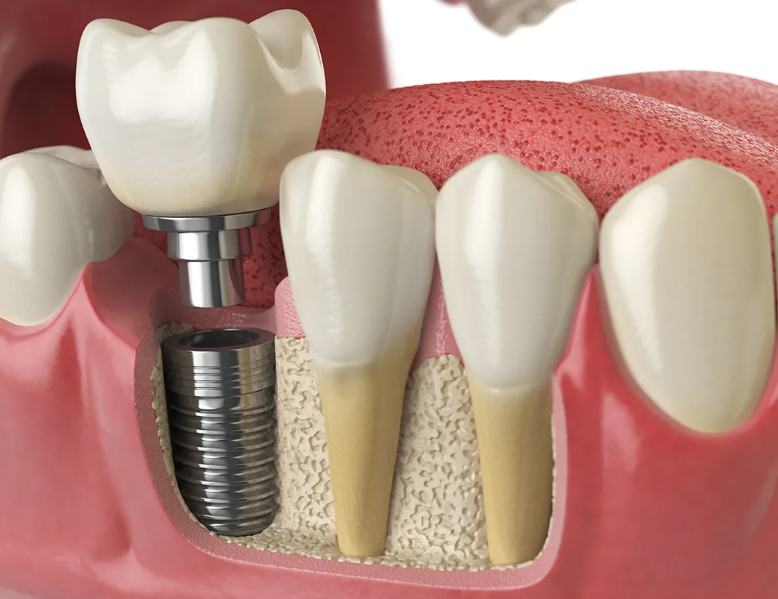
A dental implant is an effective solution for people with missing teeth mainly due to its incredible durability. Dental implants are basically artificial tooth roots. Dentists place these titanium roots surgically in your jawbone. The implants fuse with the jawbone which creates a strong foundation for a replacement tooth.
Most patients who are about to get this treatment often ask a common question. How long will the dental implants actually last? This blog answers this very question in detail.
You will also find some useful maintenance tips in this blog that will keep your dental implants in the best shape for years to come. So let’s not waste any more of your time and get right to it.
Dental implants consist of biocompatible materials like titanium. With proper care these can last for a lifetime as they fuse with your jawbone. According to a study the average long term survival percentage of dental implants stands at 94.6% with a mean follow-up of 13.4 years.
The implant post itself has a much longer life. This titanium post can survive for 25+ years with minimal maintenance. The porcelain or Zirconia crowns or dentures you place over this post usually need replacement after every 10 to 15 years.
Another research shows that patients with treated chronic periodontal disease showed about a 90 % implant survival over a period of 10 years. Factors like your gum health, oral hygiene, and chewing habits influence this timeline greatly.
According to a study, factors like oral hygiene, smoking, bone quality, implant type, and follow-up care affect the survival of dental implants. This section lists these and other common factors that affect the service life of dental implants.
The following are some useful maintenance tips that you can follow to ensure your dental implant stays in the best condition for years on end.
The key to maintaining dental health or implant integrity is the right oral hygiene. Experts recommend you brush at least twice a day. You should also floss every night, especially around the implants to clear plaque buildup.
Doctors also recommend that you use a dentist-approved antiseptic rinse to get rid of harmful bacteria. This creates an extra layer of protection that ensures the long-term health of your implants.
You also need to go for a dentist’s appointment every 6 – 12 months. Hygienist visit every 3 – 6 months If you are based in London , United Kingdom, you can visit specialist dental services for a check upThis facilitates early detection of gum diseases or implant wear and tear. This way you can prevent implant infections or degradation, which preserves the longevity of your dental implants.
If you grind your teeth often while asleep or awake it can shorten the lifespan of your dental implants. To prevent this you can use custom night guards while you sleep.
You can also wear them during physical activities or sports to protect the implants against grinding.
You need to steer away from tobacco in all its forms. Try to break your habit if you are a smoker. This not only accelerates the healing process but also lowers the risks of implant failures.
You also need to adopt balanced dietary habits after this treatment. Experts suggest you should limit the intake of icy, hard, or chewy foods to ensure the implants do not suffer degradation. A nutrient rich diet strengthens the bone structure which prevents the risks of implant failure.
Excessive alcohol consumption is a major cause of dental implant failure. Alcohol weakens your jawbone which can cause the dental implant to shift in its place. Over time this can lead to total implant failure which can cause irreversible damage to your oral health.
Dental implants can last several decades with the right aftercare or maintenance. The titanium implant post lasts you more than two decades. The crowns or dentures may need replacement every 10-15 years.
You can maintain the integrity of your dental implants longer if you indulge in healthy dietary as well as oral hygiene habits. Regular dental checkups further ensure there are fewer risks of implant complications.
You can follow the best implant maintenance practices to ensure they last for a long time without any changes in appearance or performance.
Visit us at specialist dental services today to get the best dental implant treatment from experts which lasts you a lifetime with minimum maintenance.
With the right care a titanium implant that integrates with your jawbone can last a lifetime. The replacement tooth however can suffer wear or tear which is why you may need to replace it after 10-20 years.
The implant stays intact after 25 years if you take care of it the right way. In some rare cases you might notice signs of wear. It is possible to prevent implant failure if you go for regular checkups.
If you notice persistent pain or swelling in your mouth it is a sign that the implant is about to fail. Other common signs are crown looseness or difficulty in chewing.
Your natural teeth are more resilient or stronger than implants. A dental implant cannot withstand grinding or biting too hard for a long time.
Gum diseases like peri-implantitis can lead to implant failure. This disease develops around dental implants when you do not remove the plaque properly. This triggers bone loss which results in implant failure.
You can get an implant in 3 to 6 months. Factors like the extent of treatment or bone quality affect the overall duration.

Posted On : February 4, 2026
MORE DETAILS
ADDRESS: 94 HARLEY STREET, LONDON, W1G 7HX
TEL: 020 7580 4200 | SMILE@SPECIALISTDENTALSERVICES.COM
Fields with (*) are required.
Please contact us via this website or email without disclosing confidential information.


 LIKE
LIKE
 COMMENT
 SHARE
SHARE